

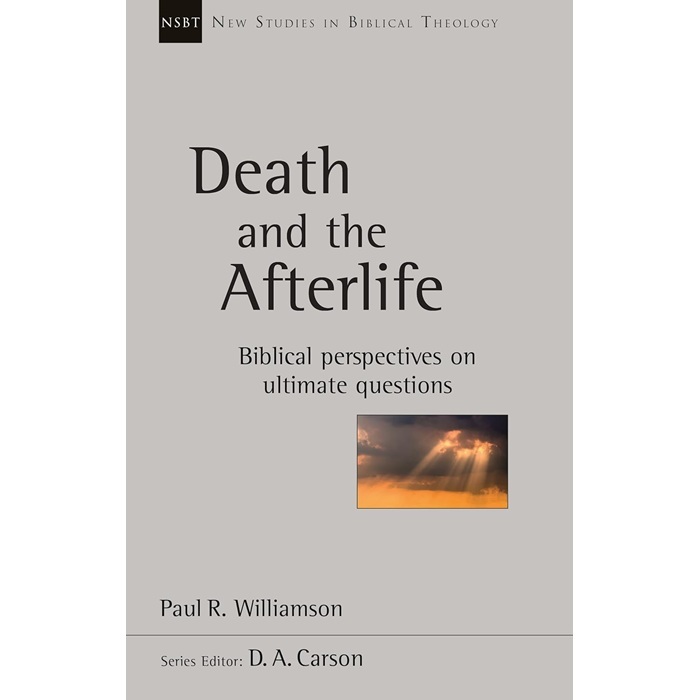
Description
‘This volume is likely to become the stimulus for more than one series of sermons . . . More importantly, it may well stimulate its readers to live life now and die well because they have learned to live with eternity in view, cherishing the blessed promises and consolations of the gospel of Jesus Christ’ (D. A. Carson).
Significant aspects of death and the afterlife continue to be debated among evangelical Christians. Paul Williamson surveys the perspectives of our contemporary culture and the biblical world, and then highlights the traditional understanding of the biblical perspective and the issues over which evangelicals have become increasingly polarized.
Subsequent chapters explore the controversial areas: what happens immediately after we die; bodily resurrection; a final, universal judgment; the ultimate fate of those who do not receive God’s approval on the last day; and the biblical concept of an eschatological ‘heaven’.
Taking care to understand the ancient Near Eastern and Greco-Roman backgrounds, Williamson works through the most important Old and New Testament passages. He demonstrates that there is considerable exegetical support for the traditional evangelical understanding of death and the afterlife, and raises questions about the basis for the growing popularity of alternative understandings.
Endorsements
Christians were once known as those who knew how to die well. In the Western world today, however, many of us have succumbed to the pressures of the surrounding culture, making us slow to talk about death and what lies beyond. Our creeds teach us to long for the new heaven and the new earth, and to trust Christ so as to escape the judgment we deserve, but instead of joining Christian voices across the ages and crying, 'Even so, come, Lord Jesus!', we sometimes succumb to a practical atheism. The first step toward regaining an eternal perspective is to rediscover what the Bible actually says about life, death, judgment, resurrection, and hell. And that is what Paul Williamson has undertaken. Taking care to understand the Ancient Near East and the Graeco-Roman world against which backgrounds the biblical documents were written, he surveys the emphases of the Old and New Testaments, working through the most important passages. This volume is likely to become the stimulus for more than one series of sermons on this subject. More important, it may well stimulate its readers to live life now and die well because they have learned to live with eternity in view, cherishing the blessed promises and consolations of the gospel of Jesus Christ.
- D. A. Carson
Table of Contents
Series preface
Author's preface
List of abbreviations
Introduction
1. After death, what? Ultimate questions about death and the
afterlife
Death and the afterlife in contemporary perspective
Death and the afterlife in ancient perspective
Death and the afterlife in the ancient Near East
Death and the afterlife in the Graeco-Roman world
Death and the afterlife in biblical perspective
Key issues in contemporary evangelical debate
Conclusion
2. Death - the ultimate separation?
Introduction
'What is man?' Biblical anthropology and the question of the soul
The state of the dead and the question of post-mortem existence
in the Old Testament
The Old Testament's depiction of post-mortem existence and the
realm of the dead
The state of the dead and the question of an 'intermediate state'
within intertestamental Judaism
The state of the dead and the question of an intermediate state
in the New Testament
Conclusion
3. Resurrection - the ultimate makeover?
Introduction
How the motif of 'resurrection' was employed and understood
in the ancient world
The Old Testament's perspective on the doctrine of resurrection
The New Testament's perspective on the doctrine of resurrection
Conclusion
4. Judgment - the ultimate verdict?
Introduction
Eschatological judgment and divine recompense in the
Old Testament
Eschatological judgment and divine recompense in the
intertestamental literature
Eschatological judgment and divine recompense in the
New Testament
A resolution to the paradox?
Conclusion
Appendix: The spiritual status of the law-abiding Gentiles in
Romans 2:12-16
5. Hell - the ultimate holocaust?
Introduction
The fate of the wicked in the Old Testament
The fate of the wicked in the intertestamental literature
Books of envisage the prospect of destruction
Books that imply post-mortem suffering/torment
Later books that may reflect Christian interpolation
The fate of the wicked in the New Testament
Conclusion
6. Heaven - the ultimate destination?
Introduction
The concept of 'heaven' and future hope in the Old Testament
The concept of 'heaven' and 'paradise' in the intertestamental
literature
The concept of 'heaven' or the future inheritance in New
Testament
The new cosmos
The new Jerusalem
The new Eden
Conclusion
Conclusion
Bibliography
Index of authors
Index of Scripture references
Index of ancient sources
Product Details
Title: Death and the Afterlife: Biblical Perspectives On Ultimate Questions
Author: Paul R. Williamson
Publisher: Apollos
Pages: 244
Binding: Paperback
Size: 21.6 x 13.8 x 2.5 cm
ISBN: 9781783595990